This year Autism Speaks announces the launching of a novel research vehicle, our new High Risk-High Impact (HR-HI) initiative, conceived to support unusual or higher-risk efforts that have the potential to change the way autism is understood and treated. The initiative aims to support cutting-edge research in areas that are under-investigated or which could benefit substantially by bringing in outside experts to elevate quality and, most importantly, the speed of progress.
The HR-HI initiative has now assembled collaborative research workgroups and awarded $2 million for five ambitious proposals across a diverse range of areas. These projects will investigate topics including the poorly-understood cognitive abilities of individuals who do not use spoken language; the incidence and biology of metabolic dysfunction; the generation of more rapid and inclusive methods for acquisition of brain imaging data; and the development of novel means for large-scale biomaterial collection.
A steering committee, formed of Pat Levitt, Ph.D. (Vanderbilt), Portia Iversen (co-founder of Cure Autism Now), Sarah Spence, M.D., Ph.D. (NIMH), and Matthew State, M.D., Ph.D. (Yale), along with Autism Speaks staff Sophia Colamarino, Ph.D. and Leanne Chukoskie, Ph.D., selected topic areas and guided the vetting process, which began the year with focused research meetings and culminated with external peer review of the final proposals at the end of 2008. The goal was to actively form and support closely-collaborating groups of research investigators in areas that have the potential to transform the way we think about ASD.
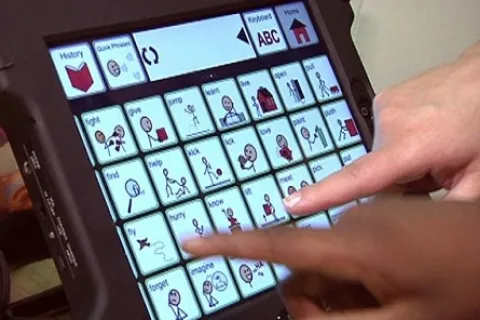
The first area of need identified by the Steering Committee is a particularly neglected subgroup of autism – individuals with autism who are non-verbal, often referred to as "low-functioning." Non-verbal individuals are nearly always presumed to have low intellectual capabilities, in part because they have no way of demonstrating their cognitive capacities. Yet some of these individuals have developed the ability to type and communicate their thoughts through alternative means, leading to a startling possibility that many more individuals may be cognitively intact but simply unable to access the ability to communicate. If true, this would have profound implications for their treatment and education but unfortunately very few researchers are working with this subgroup. Therefore, two of the five HR-HI proposals were designed to focus on developing the means to characterize and, hopefully, treat such non-verbal "low-functioning" individuals. Using funds from HR-HI, April Benasich, Ph.D. (Rutgers) and Valerie Schafer, Ph.D. (City University of NY) will apply information processing tasks they previously had developed for infants and children with holoprosencephaly and specific language impairment to now assess the ability of non-verbal children with autism to comprehend language. The second grant involves developing specialized treatments for non-verbal children, but focuses on older children who have not responded to traditional therapies. Connie Kasari, Ph.D. (UCLA) and co-PIs Ann Kaiser, Ph.D. (Vanderbilt) and Rebecca Landa, Ph.D., CCC-SLP (Kennedy-Krieger Institute) lead a study that puts priority on the development of joint attention skills of non-verbal children as a basis for developing alternative forms of communication.
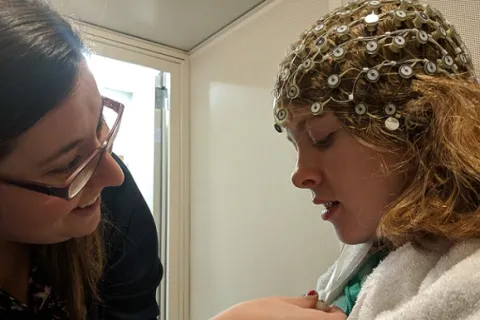
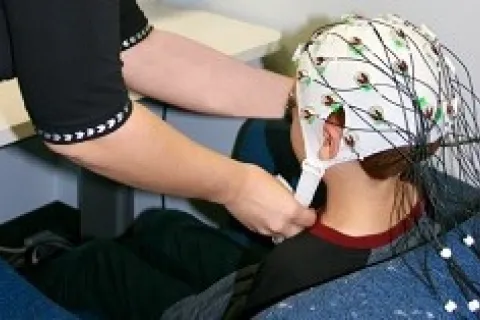
As mentioned, our ability to fully comprehend autism has been hindered in part by our inability to work with individuals with autism, some of whom may have behavioral characteristics or other features that impede their compliance. Because of this, most of what we know about autism comes from studying higher-functioning and/or older individuals. If we are to move forward to a cure, new technologies must be created that overcome this issue in order to characterize brain functioning in all types of autism and at all ages. Toward this goal, a third HR-HI grant proposes to demonstrate the ability to use novel technologies to achieve very fast (about two minutes) fMRI scans to assess functional connectivity in the brains in young children with autism while they are sleeping. Xavier Castellanos, M.D. (NYU Medical School) will lead this effort in conjunction with Cathy Lord, Ph.D. (Univ. of Michigan). Dr. Castellanos has previously used the innovative computational techniques to analyze images from children with ADHD. The hope is that translating this technique of “resting-state” imaging to autism will allow researchers to expand the population of children with ASD that can be assessed with brain imaging. Getting a picture of brain function, especially at young ages, is critical to gaining a clearer insight into the brain dysfunction in autism. The team of HR-HI researchers hopes that these pioneering studies will more conclusively test the hypothesis that disordered brain connectivity is a central component to the challenges of autism.
It is also essential to have a comprehensive understanding of other body systems in autism, not exclusive to brain function. Even though a number of small studies have hinted at its dysfunction, one of the most overlooked areas has been metabolism. The field requires clarity on if and how typical metabolism may be disrupted in autism, especially because it has direct implication for treatment strategies. As one of the original areas prioritized by the HR-HI Steering Committee upon its inception, the Autism Speaks HR-HI staff catalyzed a new working collaboration between two of the top teams in the world in mitochondrial medicine, led by Douglas Wallace, Ph.D. (UC Irvine) and Richard Haas, M.D. (UCSD) and Beatrice Golomb, M.D., Ph.D. (UCSD), enabling them to now turn their attention to autism. Together with their collaborators, they have put together a very exciting set of experiments that span metabolism, genetics and, most importantly, vetting of new techniques that may be used to non-invasively assess mitochondrial function. Current diagnostic procedures for assessing mitochondrial dysfunction include a muscle biopsy and at times also a sample of cerebrospinal fluid. The development of non-invasive methods will be essential to getting more people with autism assessed for mitochondrial dysfunction.
Finally, the fifth HR-HI grant has the potential for making tremendous change in how research recruitment for autism proceeds, hopefully making it possible for research to progress at a much more rapid pace. For example, it is becoming clear from studies in other complex disorders (such as diabetes, heart disease, and glaucoma) that understanding genetic contributions requires recruitment of not just a few thousand, but tens of thousands of individuals providing DNA samples for genetic analysis. The major hurdle in obtaining large numbers of subjects for autism research is the diagnostic bottleneck – it simply takes too long to get a research-reliable diagnosis of autism to obtain these numbers cost-effectively. A proposal from Stan Nelson, M.D. (UCLA), John Constantino, M.D. (Washington Univ.) and Paul Law, M.D., M.P.H. (Kennedy Krieger Institute) will leverage Autism Speaks' previous investments in the IAN internet community of families to develop an alternate strategy to recruit, validate the diagnosis of, and collect DNA on a large population of individuals as rapidly as possible. The investigator's goal is to recruit 6000 children with autism in a single year. If successful, in one year it would nearly double the number of individual samples already available for analyses of various types.
To put these complicated projects together, investigators have come from both in and outside of traditional autism research, but all have shown a passion for their research and a commitment of time and energy for the benefit of people who live with ASD. The HR-HI initiative is unique also in the level of support provided to the investigators as their research gets underway. To facilitate and monitor their efforts, the researchers will remain in close contact with the HR-HI staff to ensure that our new investigators encounter the wealth of other scientific resources and knowledge base provided by Autism Speaks and the entire autism community.
Abstracts for these unique HR-HI projects can be found
here. In addition, each of the efforts will be individually profiled in more detail in the upcoming months as we follow the progress of the HR-HI initiative.